


Airbus examines the future of defence testing
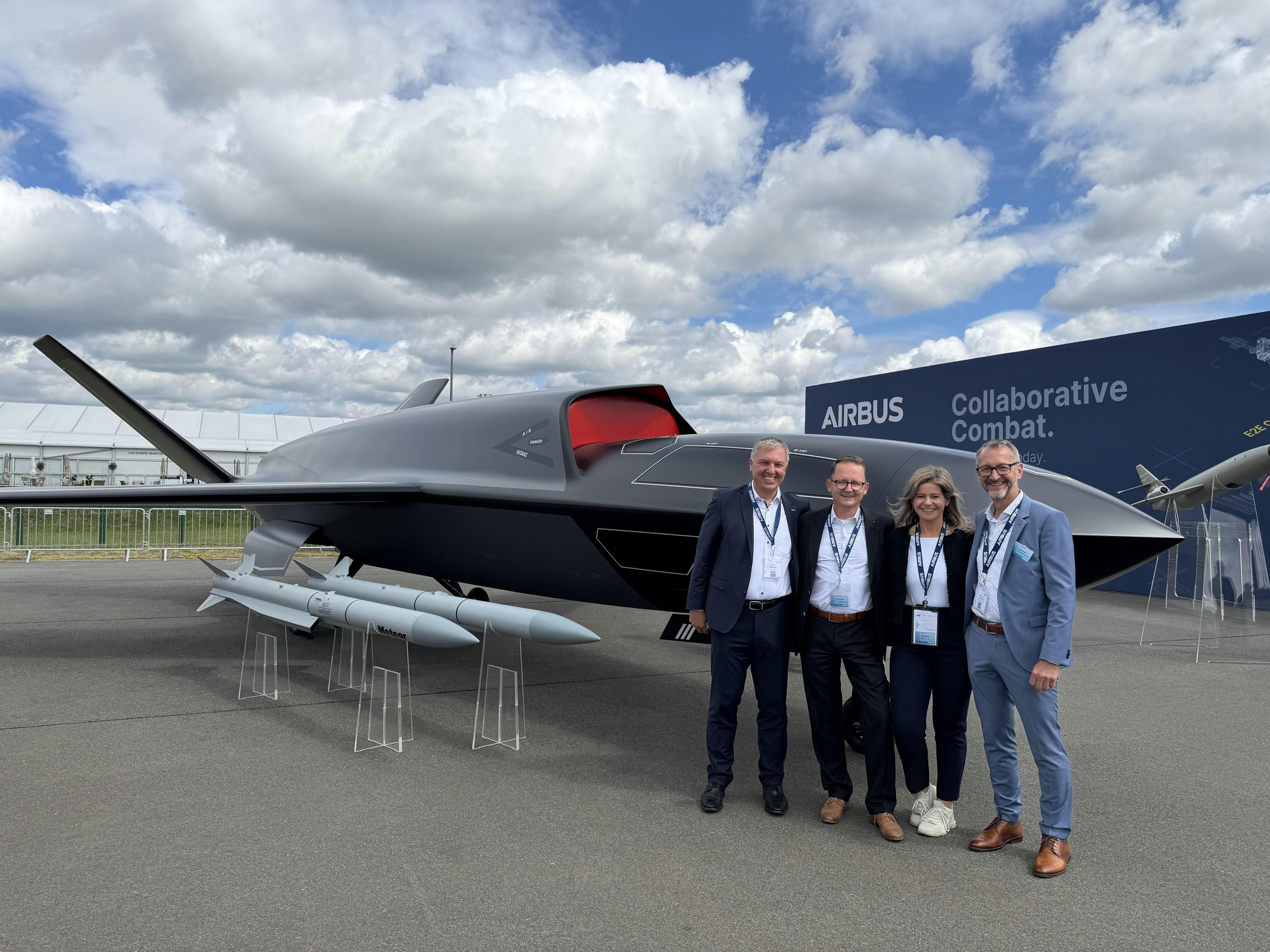
What’s driving the shift towards SoS concepts in modern air power, and why now?
“Agility in modern warfare is key. Being able to adapt to the ever-changing environment will give the competitive advantage in a military conflict.
“This ability to adapt your operational capabilities quickly can be achieved through quick software cycles on software driven features, through modular, individual weapon systems and finally through the combination of different weapons systems which are able to interact and collaborate in the force projection.
“There have always been SoS solutions. It is just that with the ability through digital means, we are now able to include autonomy and connectivity in the battlefield in a much broader sense, enabling continuous collaboration amongst manned and together with unmanned assets.”
How does developing unmanned systems differ from traditional manned weapon system development cycles?
“Speed of development is the difference and the way how to integrate and test. The change in development speed depends on the category of asset. The more capable the UAS will be and certification requirements rising, the longer it may take to develop it.
“In addition, the testing phase of the UAS will be highly automated and a lot of things will depend on the right software Dev/Sec/Ops setup.”
Can you explain the concept of hardware and software segregation, and why it matters for autonomy and AI-enabled functions?
“Hardware and software segregation is enabled through digital means in a middleware enabling to decouple the software applications from the processing hardware.
“It has two major benefits. It enables software to be changed at a higher speed than the longer lasting hardware development, and allows the re-use of software modules on different weapon systems with different hardware baseline. Both are essential topics which matter for autonomy and AI development.”
Why do existing test approaches for single, manned weapon systems fall short for SoS solutions?
“The answer is in the question: ‘single’. Collaborative warfare asks for the ability not only to test functions and capability on weapon system level. SoS requires to test the ability to interact beyond a simple data or communication link.
“Ultimately, we need to test the collaboration of autonomy functions across different weapon systems and check on the integration of single weapon systems into their collaborative and non-collaborative environment.”
What role do Live, Virtual and Constructive (LVC) setups play in testing these more complex systems?
“LVC will be essential for this, as SoS test setups will be highly complex and rarely able to be produced with large numbers of assets. A lot of the collaborative functions can be tested through LVC, where the live part may be limited to the weapon system under test, other participants of the test scenario might be virtual, or even constructed.”
How are simulation and digital verification tools changing the way products are tested before release?
“Simulation and digital verification tools need to be our continuous backbone with a continuity in data streams and model streams through the development cycle, production and in-service support.
“They will enable continuous cross check of the mainly software-driven functionalities against the original requirement. Models of increasing accuracy will be generated along this development chain enriching requirements capture and likewise speed and accuracy of testing.”
How do you ensure operational needs stay linked to product design and test requirements throughout development?
“Continuous operational analysis in a collaboration between operator and engineering is a key contributor to this in the first place. Findings out of the latest changes in the battlefield need to be translated quickly into design requirements vial relevant concept of operations considerations and derived design requirements.
“Checking of the test results against the operational role relation was and is a must in every testing step. The quicker we get into testing, the better.”
What can attendees expect to learn about the future direction of testing for autonomous and AI-enabled defence systems?
“One can expect to get insights on current, evolved test methodologies for SoS and software-defined weapon systems from requirements capture, over development to in-service phase. But likewise, people will be encouraged to think about disruptive ideas on how to revolutionise testing in the era of software-defined defence.”